Seasonal Grooming: Summer & Monsoon Pet Care
India’s climate is not gentle on our pets. From sweltering April afternoons to muggy August downpours, your furry companion’s skin and coat go through a lot — often more than we realise. Seasonal grooming is not a luxury; it is one of the simplest ways to keep your pet comfortable, infection-free, and genuinely happy all year long. Whether you have a Labrador who loves splashing in puddles or a Persian cat who sulks in the heat, this guide breaks down exactly what your pet needs during summer and the monsoon season.
Priyanka Aher
4/2/20263 min read
Why Seasonal Grooming Matters in the Indian Climate
India’s extreme temperature swings — from 42°C dry heat to 90% humidity — create unique challenges for pet skin and coats. Grooming routines that work in winter fall short when the mercury rises or the rains arrive. Neglecting seasonal adjustments can lead to:
Painful matting and tangled fur trapping heat
Bacterial and fungal skin infections from moisture
Flea and tick infestations at their seasonal peak
Overheating and heat exhaustion, especially in double-coated breeds
The good news? A few targeted grooming habits can prevent all of the above.
Summer Pet Grooming Tips (March – June)
Summer is the most demanding season for pets in India. Here is how to protect them:
1. Brush More, Not Less
Daily brushing removes dead undercoat that acts like a fur insulator. For double-coated breeds like Golden Retrievers or Huskies, a deshedding brush (like a Furminator) can reduce shedding by up to 90%, dramatically improving airflow to the skin. Aim for at least 10 minutes of brushing every day during peak summer.
2. Trim — But Never Shave
A common misconception is that shaving your dog keeps them cooler. In reality, a dog’s coat is designed to regulate temperature and protect against sunburn. Trim long-haired breeds to a manageable length, but always leave at least one inch of coat intact. Consult a professional groomer for breed-appropriate trims.
3. Increase Bath Frequency
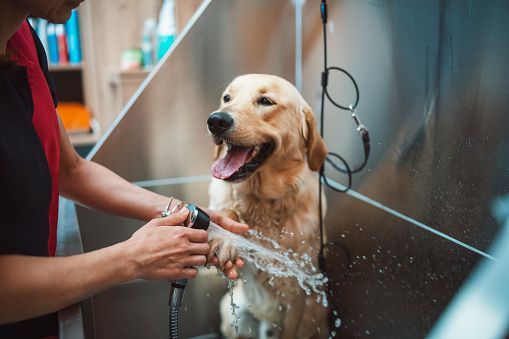
Switch to bathing every 2 weeks instead of monthly. Use a gentle, pH-balanced, anti-itch shampoo to soothe heat-stressed skin. Always ensure your pet is completely dry before leaving them in an air-conditioned room — sudden temperature changes with a damp coat can cause chills.
4. Protect Paws from Hot Surfaces
Asphalt and concrete can reach 60°C+ in Indian summer afternoons. Check the pavement with the back of your hand — if it’s too hot for 5 seconds, it is too hot for paws. Walk your pet in the early morning or after sunset, and apply a pet-safe paw balm to prevent cracking.
Daily brushing with a de-shedding tool
Fortnightly bath with cooling shampoo
Trim fur (do not shave) to breed-appropriate length
Paw balm before morning/evening walks
Ear cleaning every week to prevent infection
Fresh water available at all times
Monsoon Pet Grooming Tips (July – September)
The monsoon brings relief from heat, but introduces a new set of grooming challenges — primarily moisture-related skin problems and pest activity.
1. Dry Your Pet Thoroughly After Every Outing
This is the single most important monsoon grooming habit. Wet fur left unattended for hours is the perfect environment for fungal growth and hot spots. Keep a dedicated microfibre towel near the entrance and dry your pet immediately. For thick-coated dogs, a pet-safe blow dryer on a low, warm setting ensures the undercoat dries completely.
2. Watch for Fungal Infections
Signs of a fungal infection include persistent scratching, redness, a yeasty smell, or crusty patches on the skin. If you notice any of these, switch to an anti-fungal pet shampoo containing ketoconazole or chlorhexidine, and consult your veterinarian. Do not ignore early signs; fungal infections spread quickly in humid conditions.
3. Step Up Tick and Flea Prevention
Monsoon is peak tick season in India. Use a vet-recommended flea and tick preventive — whether a topical spot-on, a collar, or a monthly tablet. Check your pet’s skin after every outing, especially around the ears, between toes, and under the collar.
4. Keep Ears Clean and Dry
Floppy-eared breeds like Cocker Spaniels and Beagles are especially prone to ear infections during monsoon. Clean ears gently with a vet-approved ear cleanser once a week. Look out for head shaking, odour, or dark discharge — all signs that your pet needs veterinary attention.
Dry pet fully after every outing (microfibre towel + blow dryer if needed)
Anti-fungal shampoo bath every 10–14 days
Weekly ear cleaning with vet-approved solution
Daily tick-and-flea check (ears, paws, underbelly)
Keep bedding clean and dry, wash weekly
Regular vet check-up at the start of monsoon season
The Golden Rule: Consistent Grooming Year-Round
Seasonal grooming works best when it builds on a solid year-round foundation. Establish a routine that includes weekly brushing, monthly baths, fortnightly nail trims, and periodic professional grooming sessions. Think of it as preventive care — far easier and less expensive than treating infections, matting, or infestations after they develop.
Your pet cannot tell you when their skin is irritated or their coat is overheating them. As their caregiver, seasonal grooming is your most powerful tool to ensure they feel as good as they look.
Conclusion
India’s summers and monsoons demand more from your pet grooming routine than a once-a-month bath. By adjusting your approach to match the season — more brushing in summer, thorough drying in monsoon, and vigilant tick checks through both — you give your pet the protection their skin and coat genuinely need.
Start small: pick one tip from each season’s checklist and build from there. Your pet will thank you with a healthy, gleaming coat and a whole lot of tail wags.
pet grooming India, summer pet care, monsoon pet grooming, dog grooming tips, cat care summer, seasonal pet care, tick prevention dogs, pet skin care